
Lifestyles of the Rich & Reckless: Super Speeders Drive Luxury Cars, Rack Up Millions in Speeding Tickets Annually — New Data from Transportation Alternatives and Families for Safe Streets
Super speeders are 72% more likely to drive a new vehicle, and 57% more likely to drive a luxury vehicle than the average driver.
In 2025, super speeders racked up more than $10 million in speed camera tickets — enough to pay for more than 7,000 ISA devices for a year.
87% of super speeders have paid $1,000 or more in fines, fees, and penalties. The average super speeder has paid off $4,890 — more than three times the cost of operating ISA for a year.
The most paid off by any super speeder is $70,536, by the driver of a luxury 2022 BMW X5.
NEW YORK — Super speeders — a small number of drivers who are undeterred by repeatedly receiving speeding tickets and have received at least 16 tickets in a single year — are much more likely to drive a new luxury car than other drivers on the road, according to new data from Transportation Alternatives and Families for Safe Streets.
While only 25% of drivers on the road are operating luxury vehicles, this number rockets up to 40% among super speeders. And the more speeding tickets a super speeder gets, the more likely they are to have received them behind the wheel of a luxury vehicle: 52% of the top 100 super speeders drive luxury vehicles. Among all drivers in New York City, the most common car brand is Honda, but among the top 100 worst super speeders, the most common car brands are BMW and Mercedes-Benz.
“Super speeders are spending millions to speed through your neighborhood in brand-new luxury cars,” said Ben Furnas, Executive Director of Transportation Alternatives. “Passing the Stop Super Speeders bill will save lives and even save money for super speeders themselves — most of whom are spending thousands more on speeding tickets than they would on a speed limiter. We can’t let just a few New Yorkers put all of us at risk, and Albany can save lives by ensuring that Stop Super Speeders is in the final state budget.”
“Super speeders are racking up millions of dollars in tickets and putting all of us at risk,” said Joe Jankoski, a member of Families for Safe Streets who lost his partner, Amanda Servedio, to a super speeder last year. “These super speeders are spending way more to pay the fines from their excessive tickets than they’d spend on a speed limiter, and they’re still not slowing down. We can’t sit by while a few thousands New Yorkers terrorize the rest of our city, and Albany must pass Stop Super Speeders in the state budget.”
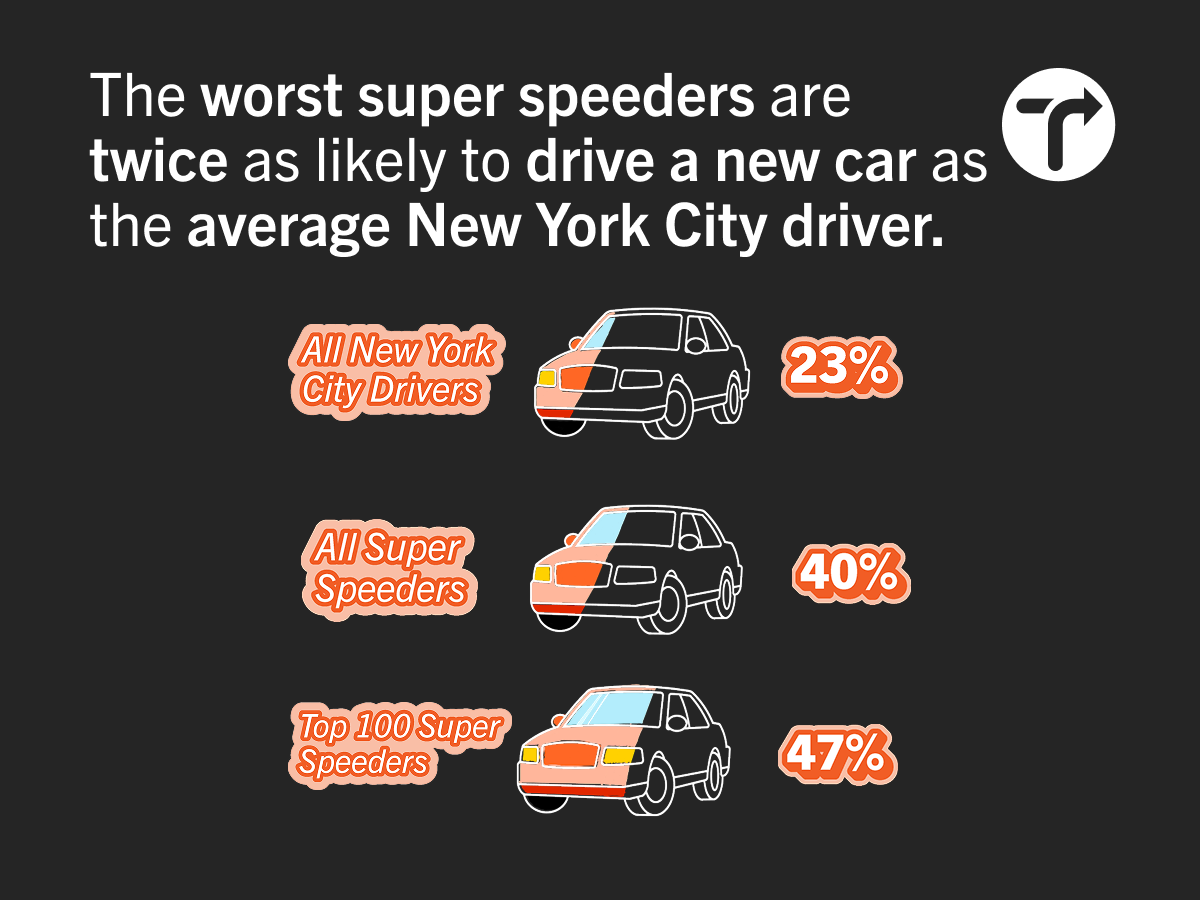
Super speeders are 72% more likely to drive a new car than the average New York City driver. The vast majority of drivers in our city aren’t driving brand-new cars — only 23% of all New York City drivers are operating vehicle models from the past three years. But among super speeders, 40% drive new cars. And the more tickets they rack up, the newer the cars get: among the 100 most reckless drivers, nearly half are driving new cars.
Financial penalties don’t deter super speeders.
The vast majority of super speeders are paying off their fines as they accrue them, and are not in significant debt. Four in five super speeders have paid off more than they still owe, paying an average of $5,720, and owing just $488.
The average super speeder has paid off $4,890 — more than three times as much as it would cost to operate ISA for a year. The most paid off by any super speeder is $70,536, by a 2022 BMW X5.
The average super speeder owes $1,266, and the most owed is $93,714, by the driver of a 2024 Mercedes-Benz GLS-Class.
87% of super speeders have paid $1,000 or more in fines, fees, and penalties. 950 super speeders have paid off $10,000 or more — more than twice as many as the number of super speeders who’ve not paid off any of their fines.
In 2025, super speeders racked up $10.3 million in speeding fines — enough to pay for more than 7,000 ISA devices for a year.
Super speeders are an extremely small number of New York City drivers – less than one-half of one percent. The vast majority of drivers who get one or two speeding tickets never receive a third — but a small number of drivers continue to speed undeterred by financial penalties.
###
